
What Is Carbon Steel?
Carbon steel is one of the most widely used materials in engineering and fabrication. At its simplest, it is an alloy of iron and carbon, with the carbon content typically up to around 2%. While small amounts of other elements, such as manganese or silicon, may be present, these are generally at much lower levels than those found in alloy steels.
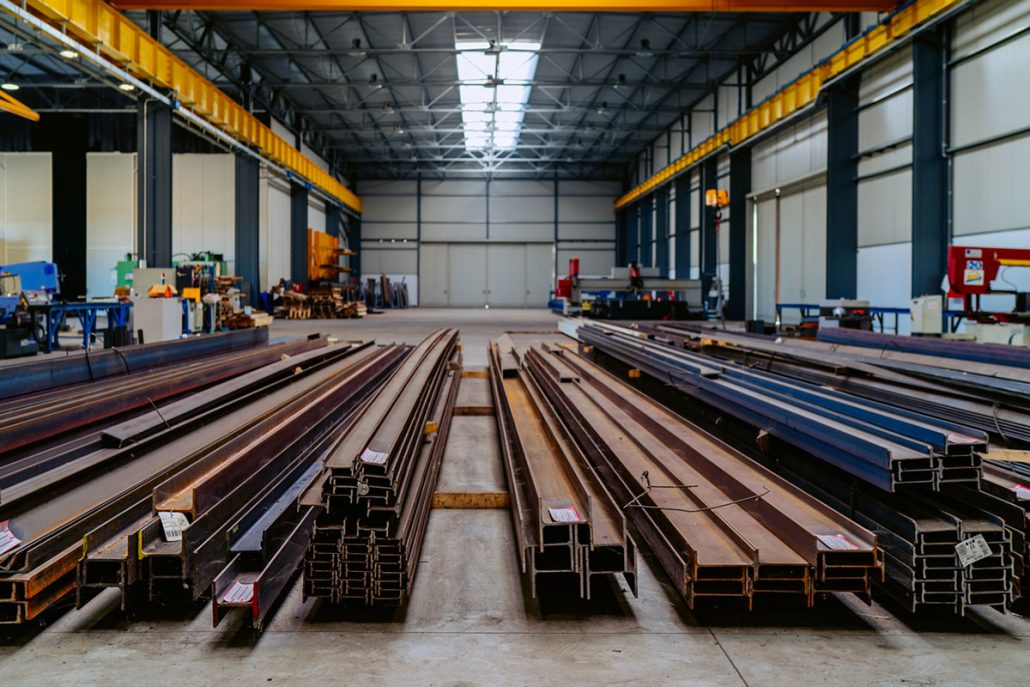
The mechanical properties of carbon steel, such as strength and ductility, are driven primarily by the amount of carbon it contains. By adjusting this carbon content, engineers can select a material that balances formability, strength, and durability for a wide range of applications.
In practice, carbon steel is grouped into low-, medium-, and high-carbon grades, depending on how much strength and formability is required. Its versatility and practicality make it a common choice for structural steelwork, plate, pipe, machinery components, and general fabrication. In particular, low-carbon (mild) steel is easy to cut, form, weld, and machine, making it highly efficient to work with in a fabrication environment.
Types of Carbon Steel
Low Carbon Steel (Mild Steel) typically contains between 0.05% and 0.25% carbon. It is highly formable and weldable, making it ideal for general construction, structural steelwork, and applications such as vehicle bodies and fabricated frames.
Medium Carbon Steel contains approximately 0.25% to 0.60% carbon. This higher carbon content provides increased strength and hardness compared to mild steel, which is why it is commonly used for machinery components such as shafts, axles, and gears.
High Carbon Steel usually contains between 0.60% and 1.25% carbon or more. These steels are very hard and strong but less ductile, which limits their use in fabrication. They are typically reserved for tools, springs, cutting implements, and wear-resistant components such as blades and drills.
Corrosion Resistance
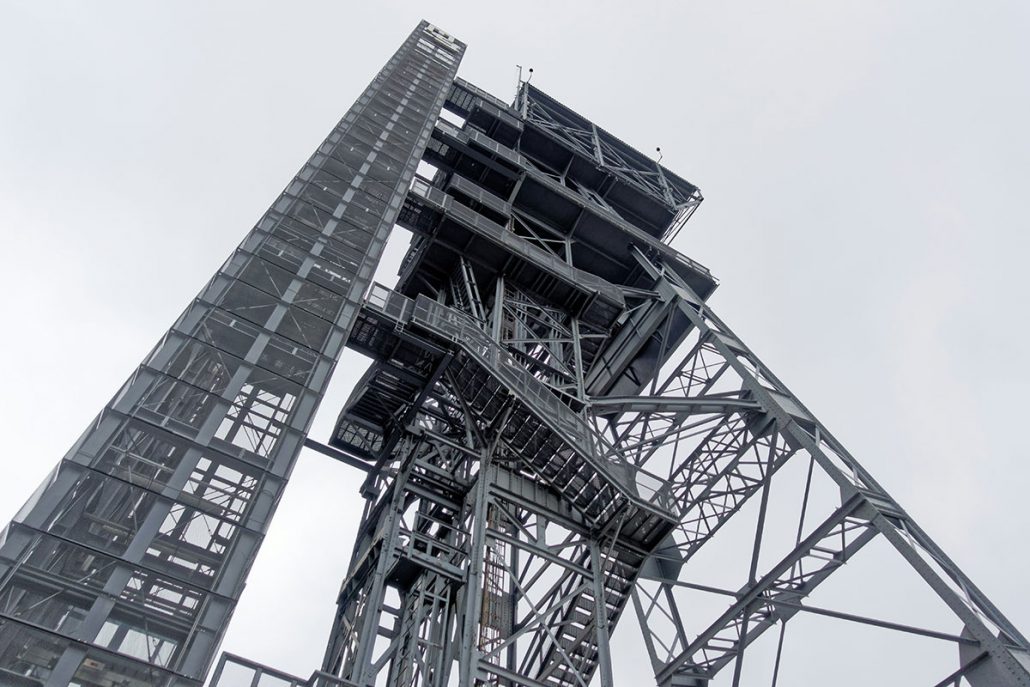
Standard carbon steel is not inherently corrosion-resistant. In most environments, it will rust if left unprotected. Effective corrosion control depends on a combination of material preparation, protective systems, and good design.
Common protection methods include primers and paint systems, galvanising, and powder coating. These coatings rely on correct surface preparation – such as shot blasting, degreasing, and cleaning – to ensure long-term performance. Design also plays a role, with details that minimise water traps and allow proper drainage, helping to reduce corrosion risk.
In aggressive environments, such as marine or chemical settings, engineers may specify enhanced coating systems or consider alternative materials where appropriate.
Why Was Carbon Steel Developed?
Carbon steel emerged as an improvement on earlier materials such as wrought iron and cast iron, which offered limited strength, toughness, and consistency. As engineering projects grew in scale and complexity, there was a clear need for a material with predictable, repeatable properties. The development of industrial steelmaking processes, notably the Bessemer and open-hearth processes, enabled large quantities of steel to be produced with consistent quality.
Carbon steel offered a strong strength-to-cost ratio, which played a key role in supporting industrialisation. Its suitability for rolling, forging, welding, and machining made it the logical choice for bridges, railways, pressure vessels, machinery, and countless other engineering applications.
Burnhouse Engineering Projects Using Low-Carbon (Mild) Steel
At Burnhouse Engineering, low-carbon steel is a core material across many of our fabrication projects due to its reliability, availability, and ease of manufacture. In structural steelwork, mild steel is used for beams, columns, platforms, staircases, handrails, and access steelwork in both buildings and industrial facilities.
For general fabrication, we manufacture frames, brackets, supports, guards, plinths, walkways, mezzanines, and bespoke fabrications tailored to specific operational requirements. Carbon steel is also widely used for pipes and ducting, including process pipework, fire mains, water lines, and ventilation or exhaust systems within factories and plant rooms.
In non-critical tanks and vessels, such as storage tanks, hoppers, bins, and silos, mild steel provides a cost-effective solution for handling water, fuels, aggregates, and bulk materials. Beyond plant environments, carbon steel underpins reinforcement and infrastructure projects, including rebar for concrete, road barriers, street furniture, poles, masts, and sign gantries.
Fabrication Considerations When Working With Carbon Steel
Design and Detailing
Good fabrication begins with good design. When working with carbon steel, this includes selecting appropriate section sizes and plate thicknesses to meet loading and deflection requirements. Designs must allow for weld access, realistic tolerances, and safe lifting points during manufacture and installation.
Where precision fits are required, machining allowances should be incorporated from the outset. Designing for inspection and maintenance over the asset’s life further improves safety and long-term performance. Thoughtful detailing reduces rework, improves fabrication efficiency, and ensures the finished structure performs as intended.
Cutting, Forming, and Assembly
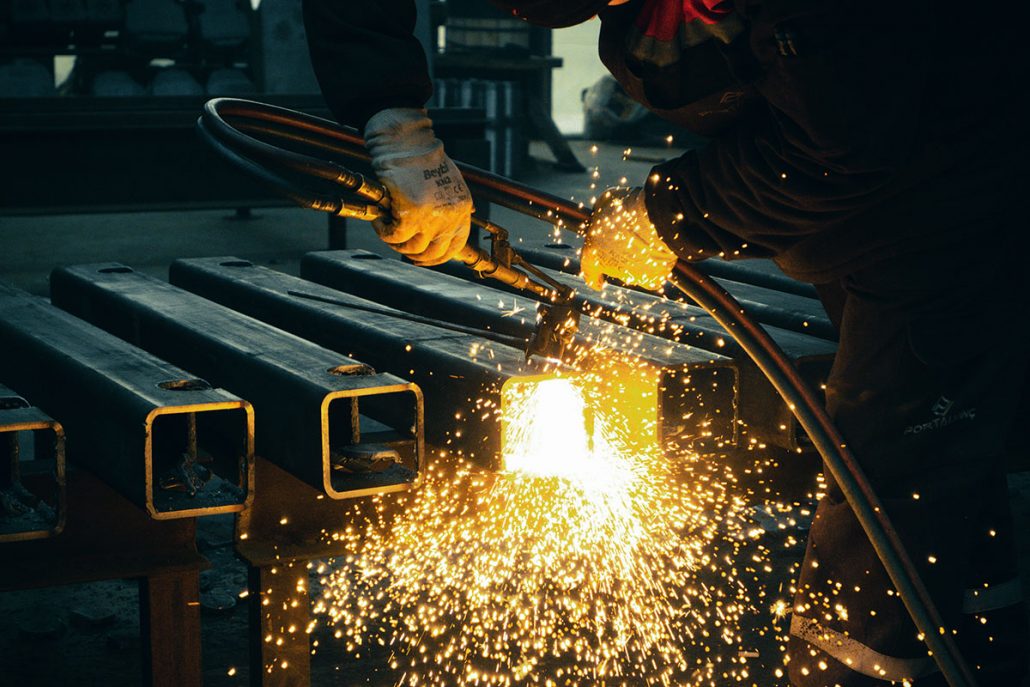
Modern carbon steel fabrication relies on a combination of advanced equipment and skilled trades. CNC profile cutting – using plasma, laser, or oxy-fuel processes – allows accurate nesting and efficient material use. Rolling and folding are commonly used for tanks, ducts, frames, and brackets. During assembly, jigs and fixtures help maintain alignment and dimensional accuracy, ensuring repeatable quality even on complex fabrications

Welding and Quality Control
Robust welding procedures and inspection regimes are essential when fabricating carbon steel structures. Higher carbon steels may require pre-heating and post-weld heat treatment to control cooling rates, prevent hardening, and reduce the risk of cracking.
Welding is carried out in accordance with approved Welding Procedure Specifications (WPS), supported by Procedure Qualification Records (PQR). Welders are qualified through Welder Performance Qualifications (WPQ) and experienced in the appropriate processes, including MIG/MAG, TIG, and FCAW.
Visual inspection, non-destructive testing, and dimensional checks are applied as required by project specifications. For safety-critical structures, documentation and traceability are just as important as the weld itself.
Carbon Steel vs Alternative Materials
Carbon steel often remains the most economical and practical solution for many engineering applications. Its advantages include lower material costs compared with many alloy alternatives, wide availability in plates, sections, and tubes, and excellent compatibility with standard fabrication processes. Its mechanical properties are well understood and predictable.
There are, however, limitations to consider. Carbon steel requires protective coatings or galvanising to achieve corrosion resistance, and it is heavier than materials such as aluminium, which may influence weight-sensitive designs. Higher-carbon grades also demand stricter welding controls.
In practice, the correct material choice depends on the operating environment, loading conditions, regulatory requirements, and whole-life cost considerations.
Where Carbon Steel Engineering Adds Value
Engineering with carbon steel supports a wide range of sectors. These include structural steelwork for buildings, platforms, and access systems; process plant skids, pipework, tanks, and frames; and rail, marine, and offshore fabrications.
It is also widely used in bespoke machinery, guards, supports, and handling equipment. Working with a specialist fabrication partner adds further value, providing access to design input, manufacturing expertise, and quality assurance that ensure carbon steel components meet performance and safety requirements.
Working With a Carbon Steel Fabrication Partner like Burnhouse Engineering
A capable fabrication partner does more than supply material. At Burnhouse Engineering, we support clients by helping to select suitable grades and thicknesses, optimising designs for manufacturability and cost, and delivering high-quality fabrication through qualified welders and certified procedures.
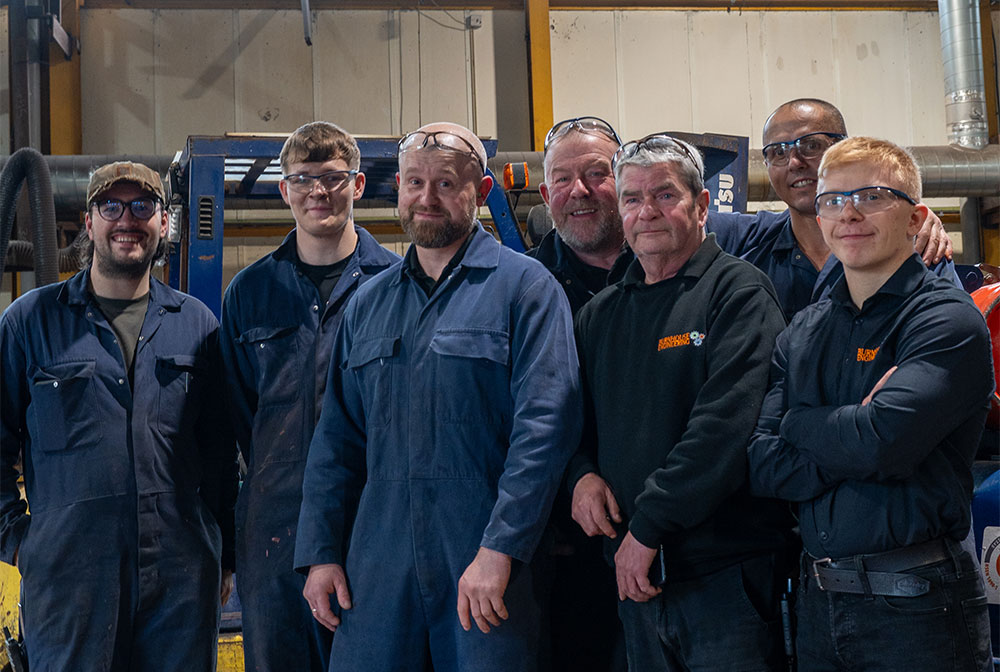
We manage cutting, forming, welding, machining, and finishing either in-house or through trusted specialist partners. Full documentation, including material traceability and inspection records, is supplied where required.
This integrated approach means fabrications arrive on site ready to install, with quality and safety already built into the job, not added as an afterthought. Burnhouse Engineering delivers carbon steel fabrication services across Scotland and the UK, combining practical engineering insight with decades of fabrication expertise.