
When you need metalwork, structural steel work, welding, laser cutting or fabrication support, getting a fast and accurate fabrication quote often depends on the quality of information you provide at the start.
A fabrication quote is not just a price for cutting, folding or welding metal. It is based on drawings, materials, quantities, tolerances, finishes, timescales and, in some cases, site conditions. If those details are missing or unclear, the supplier may need to ask follow-up questions before they can price the work properly.

For buyers, engineers, maintenance teams and project managers, this can make a real difference. When Burnhouse Engineering, receives a well-prepared enquiry it can reduce delays, avoid assumptions, improve accuracy and help the project move forward more quickly.
This guide explains what to send when requesting a fabrication quote, why those details matter, and how to help your supplier respond with the right information first time.
What to Send for a Fabrication Quote
If you want a faster fabrication quote, the most useful information to send includes:
- Drawings or sketches
- DXF, DWG or STEP files where available
- Material type, grade and thickness
- Quantities required
- Critical dimensions and tolerances
- Finish requirements
- Welding or assembly requirements
- Delivery location or site address
- Required timescale
- Photos, if the work involves an existing part, repair or modification
You do not need to have every detail confirmed before making an enquiry. However, the more complete the information is, the easier it is for a fabrication team to understand the work, check what is needed and provide a realistic quotation
Why Fabrication Quotes Can Take Longer Than Expected
Fabrication projects often involve several stages. A single job may include laser cutting, folding, drilling, welding, finishing and delivery. If the enquiry is missing key details, the supplier may need to pause the quotation process and ask for clarification.
Common causes of delay include:
- Missing drawings
- Incomplete or unclear files
- No material grade or thickness
- Unclear quantities
- No finish specified
- Missing tolerances
- No delivery location
- Conflicting drawing revisions
- Photos supplied without measurements
These are common issues, especially when a project starts with a quick email, an old part, a hand sketch or an urgent site problem. However, each missing detail can slow the process down.
A good fabrication supplier will always try to help, but they still need enough information to price the work accurately.
Start With the Right Drawings or Files
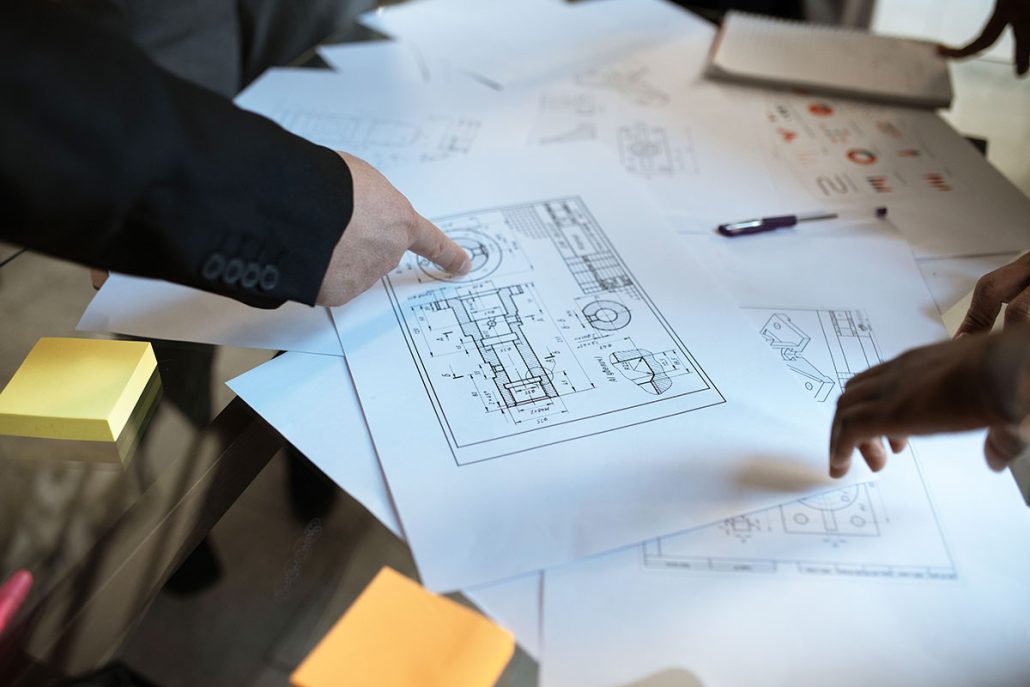
For most fabrication work, drawings are the best starting point. They help the supplier understand the shape, size, dimensions, tolerances and manufacturing route.
Where possible, send a PDF drawing as well as any relevant CAD files.
Useful file types include:
- DXF files for flat laser-cut profiles
- DWG files for 2D drawings
- STEP files for 3D parts or assemblies
- PDF drawings for dimensions, notes and revision details
A DXF file is particularly useful for laser cutting because it provides the cutting profile. A PDF drawing supports this by showing dimensions, hole sizes, bend lines, material notes and any important tolerances. If you do not have CAD files, a sketch or photograph can still help. However, it should include key dimensions. Without measurements, it may only be possible to give an initial guide rather than a confirmed fabrication quote.
Confirm the Material, Grade and Thickness
Material information has a direct impact on cost, availability, cutting method, welding process and finishing requirements.
When requesting a metal fabrication quote, try to include:
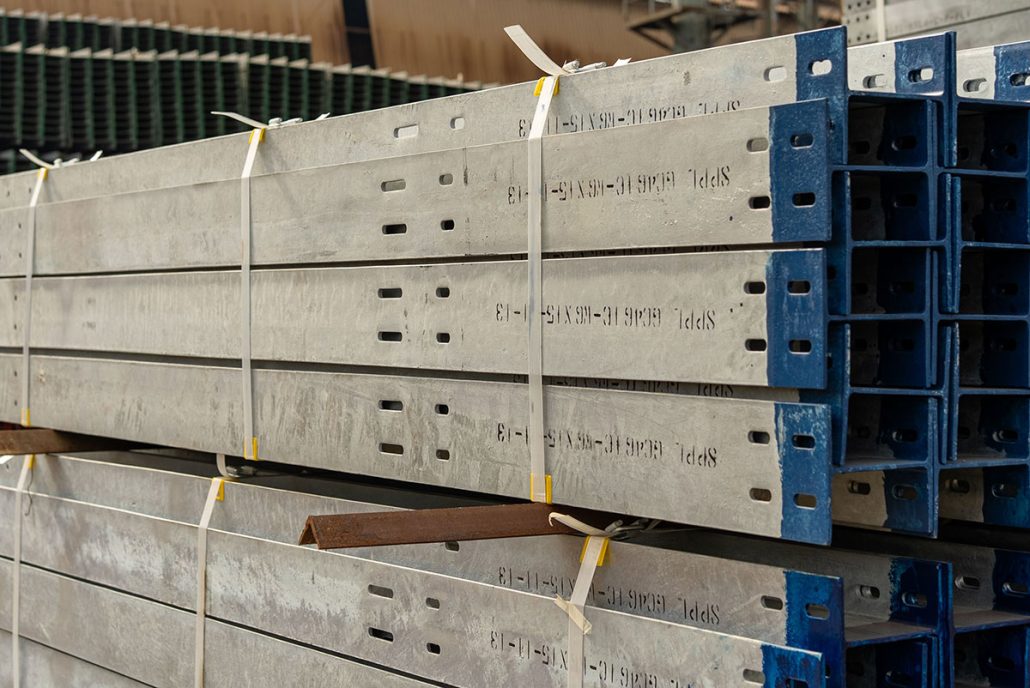
- Material type, such as mild steel, stainless steel or aluminium
- Material grade, if known
- Sheet, plate, box section, tube or pipe size
- Material thickness
- Any required standard or specification
For example, “stainless steel” is helpful, but “3mm 304 stainless steel sheet” is much clearer. “Mild steel box section” is also a useful start, but the supplier will still need the section size, wall thickness and quantity before they can quote properly.
If you are unsure which material is best, say so. A fabrication partner can often advise on practical options based on strength, cost, corrosion resistance, appearance and the environment the part will be used in.
Be Clear About Quantities
Quantity is one of the biggest factors in a fabrication quotation.
A one-off prototype, a small batch and a repeat production run may all be priced differently. Set-up time, programming, material use and handling can all affect the final cost. Try to include:
- The total number of parts required
- Whether the job is a one-off or repeat order
- Whether you need prototype pricing and batch pricing
- Any expected future quantities
For example, if you need one prototype now but may need 50 or 100 parts later, tell the supplier. They may be able to suggest a more efficient production route or provide separate pricing for prototype and batch manufacture.
Explain What the Part or Fabrication Is For
A drawing tells the supplier what to make. The application explains why it matters. Knowing how the part will be used helps the fabrication team understand whether strength, appearance, corrosion resistance, hygiene, tolerance or installation speed is the priority.
Useful context may include:
- Is the part structural or non-structural?
- Will it be used indoors or outdoors?
- Is it exposed to water, chemicals, heat or impact?
- Does it need to support weight or movement?
- Is appearance important?
- Is it part of a food, pharmaceutical or hygienic process environment?
- Does it need to fit with existing equipment, steelwork or pipework?
This information helps avoid assumptions. A simple internal bracket may not need the same finish, documentation or fabrication approach as a component used outdoors, in a production environment or as part of a safety-critical assembly.
Include Critical Tolerances
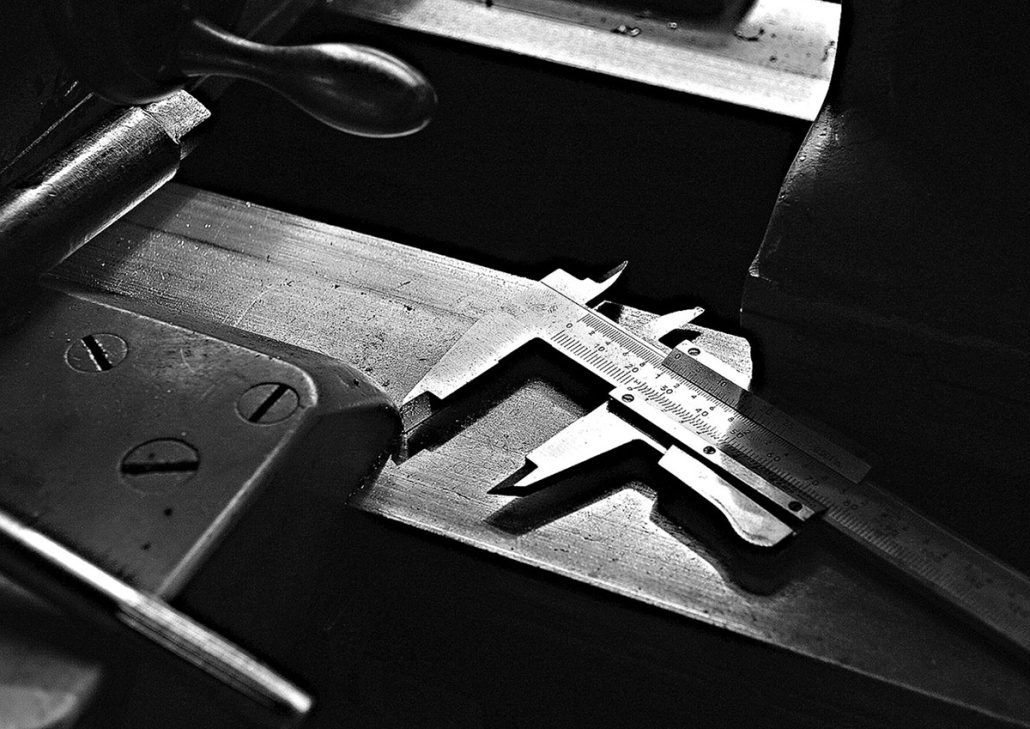
Not every dimension needs a tight tolerance. In fact, specifying unnecessary tight tolerances can increase cost and slow down production. However, if certain dimensions are critical, make them clear. Examples include:
- Hole positions for bolted connections
- Fold angles that affect assembly
- Slots or tabs used for fit-up
- Overall dimensions where the part fits into existing equipment
- Flatness or alignment requirements
- Welded assemblies that must remain square
- Pipework or steelwork that must connect to existing services or structures
Where tolerances matter, mark them clearly on the drawing. Where they are not critical, avoid over-specifying. This helps the fabricator focus accuracy where it matters most and keep the job practical to manufacture.
State the Finish Required
Finishing can affect both cost and lead time, so it is useful to discuss it early. Depending on the project, you may need:
- Raw finish
- Deburred edges
- Ground or linished welds
- Powder coating
- Painting
- Galvanising
- Polished stainless steel
- Brushed stainless steel
- Hygienic finish for clean environments
If the part will be visible, handled regularly, installed outdoors or used in a controlled process environment, the finish should be made clear in the enquiry.
A part that only needs to be functional may require a simple deburr. A stainless steel part for a clean production area may need more careful finishing. An outdoor fabricated item may need a protective coating system to improve durability.
Mention Any Welding or Assembly Requirements
If the job involves welding, the supplier will need to understand the type of assembly required.
Include details such as:
- Whether parts are to be supplied loose or welded together
- Any weld sizes or weld symbols shown on the drawing
- Whether the welds are structural, hygienic or cosmetic
- Whether distortion control is important
- Whether the assembly needs inspection or documentation
- Whether the work involves mild steel, stainless steel or aluminium
Welding is often where fabrication experience makes a significant difference. Cut parts may look simple on their own, but once heat, fit-up and assembly are involved, good planning helps avoid distortion, rework and delays.
Share Site Information for Installation or On-Site Work
If the fabrication quote includes installation, repair, on-site welding or site modifications, drawings alone may not be enough. Useful site information includes:
- Site address
- Access restrictions
- Working hours
- Parking or loading details
- Whether permits or inductions are required
- Photos of the working area
- Measurements of the existing structure or equipment
- Whether the work is indoors, outdoors or at height
- Any safety requirements or method statement expectations
For urgent repairs or emergency engineering work, photos and measurements can help the supplier assess the problem quickly. For more complex work, a site visit may still be needed before a final quotation can be confirmed.
Provide the Required Timescale
Lead time matters, but “as soon as possible” does not always give the supplier enough information. Be clear about:
- When you need the quote returned
- When you need the work completed
- Whether there is a fixed installation date
- Whether the work is linked to a shutdown or project deadline
- Whether partial delivery would help
This allows the fabrication team to check workshop capacity, material availability and delivery options. If the deadline is tight, they may be able to suggest a simpler or faster route.
Avoid Sending Conflicting Information
One of the most common causes of delay is conflicting project information.
This can happen when an old drawing, a revised drawing and an email instruction all say slightly different things. Before sending the enquiry, check that the files match and that the revision is clear.
Helpful steps include:
- Mark the latest drawing revision clearly
- Remove outdated files from the enquiry
- Use consistent part names or numbers
- Confirm whether dimensions are in millimetres
- State whether the drawing or email instruction takes priority
Clear revision control helps avoid mistakes and gives both the buyer and fabricator confidence that the quote is based on the right information.
Fabrication Quote Checklist
Before asking for a fabrication quote, check whether you can provide the following:
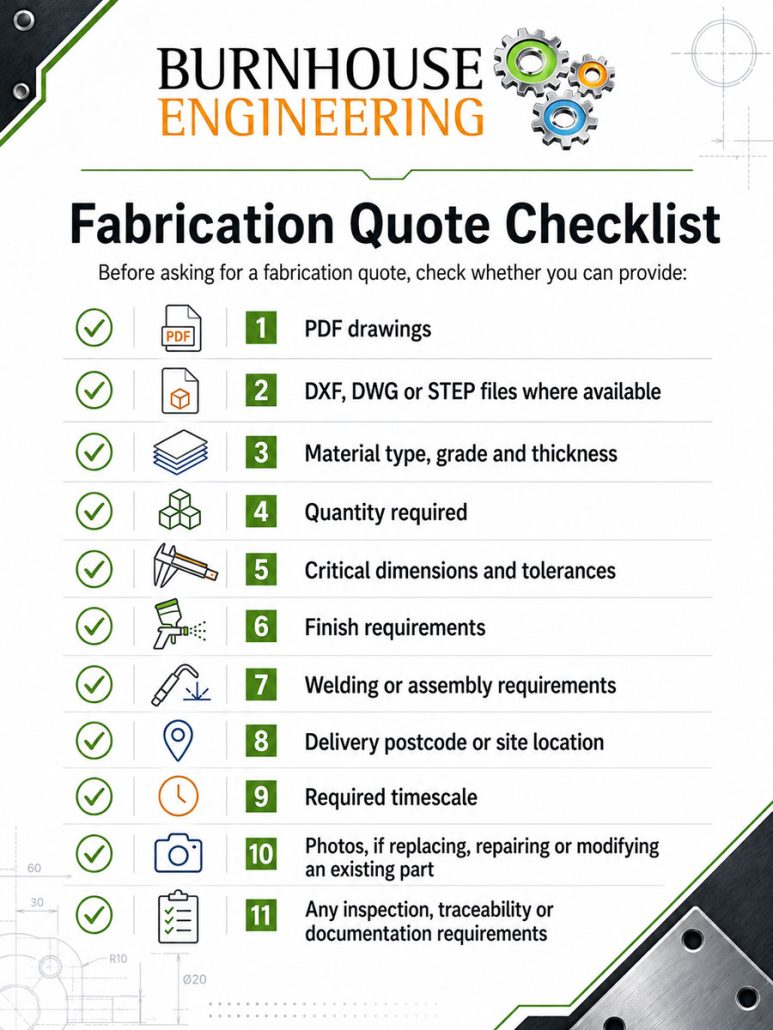
The aim is not to make the enquiry complicated. It is to give the supplier enough information to quote accurately and reduce unnecessary back-and-forth.
How Burnhouse Supports Fabrication Enquiries
Burnhouse Engineering supports businesses across Scotland and the UK with fabrication, welding, laser cutting, pipework and engineering services.
Because our team works across cutting, folding, welding, fabrication, site work and engineering design, we can help customers turn drawings, sketches and project requirements into practical fabricated components.
Where files are complete, we can move quickly to pricing. Where details need refining, we can advise on material choice, fabrication method, welding approach and practical ways to improve manufacturability.
Whether you need a one-off part, replacement steelwork, laser-cut components, a welded assembly or fabrication support for a wider project, clear information at the start helps us give you a better quote and a smoother route through production.
Final Thoughts
Getting a faster fabrication quote is not just about asking quickly. It is about giving the supplier the information they need to understand the work properly.
Clear drawings, material details, quantities, tolerances, finishes and timescales all help reduce uncertainty. They also help avoid assumptions that could affect cost, lead time or final quality.
If you are planning a fabrication project, send Burnhouse Engineering your drawings, files or project details and our team will advise on the most practical route forward.