
What It Is, How Accurate It Gets, and Where It’s Used
Tube laser cutting has become one of the most efficient and precise methods for processing metal tubing and open profiles. Businesses choose it for its speed, accuracy, repeatability, and its ability to significantly reduce fabrication costs by combining multiple operations into a single process.
Whether you are a fabricator, product designer, or OEM (Original Equipment Manufacturer) looking to streamline production, tube laser cutting offers a fast and reliable route from design to finished part.
If you need tube laser cutting services, tube profiling, or CNC tube cutting in Scotland or across the UK, Burnhouse Engineering provides rapid lead times and high-quality results. Send us your drawings today for a competitive quote.
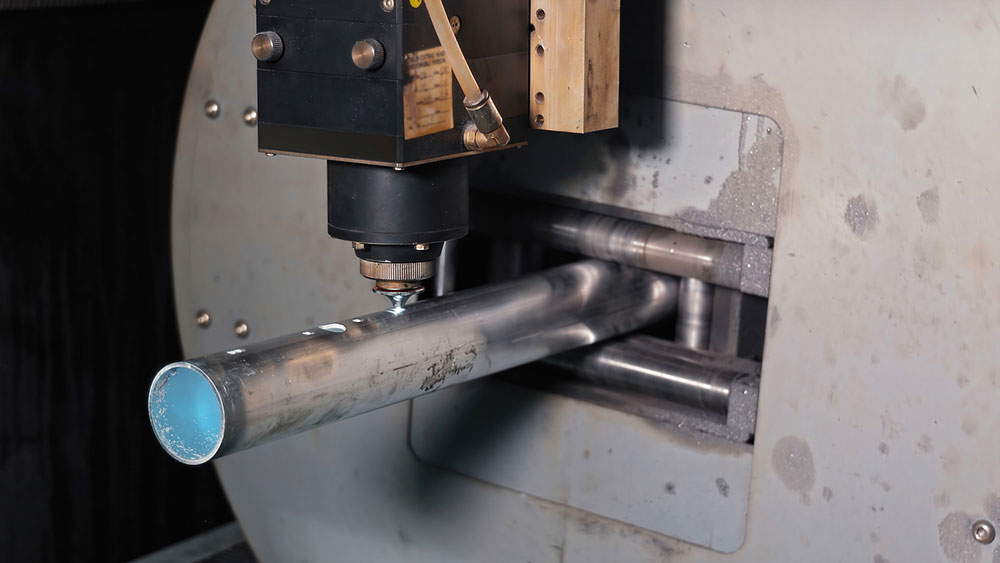
What Is Tube Laser Cutting – and How It Works
Tube laser cutting uses a CNC (computer numerically controlled) laser equipped with a rotary axis to cut round, square, rectangular, and even open profile sections with precision. Modern fibre laser tube machines allow operators to carry out multiple in-line processes in one hit, including:
- Mitres
- Fish-mouths or coping
- Slots and cut-outs
- Part marking
- Weld-prep bevels
This makes tube laser cutting ideal for complex geometries that would traditionally require several machines and several set-ups.
Supported Profiles
Tube laser machines can process a wide variety of closed and open profiles, including:
- Round tube
- Square tube
- Rectangular box section (RHS/SHS)
- Oval and elliptical tube
- Angle iron
- Channel
- Flat bar
Most machines are designed to handle long stock lengths (typically 6m or more), with automatic loading and unloading for fast batch processing.
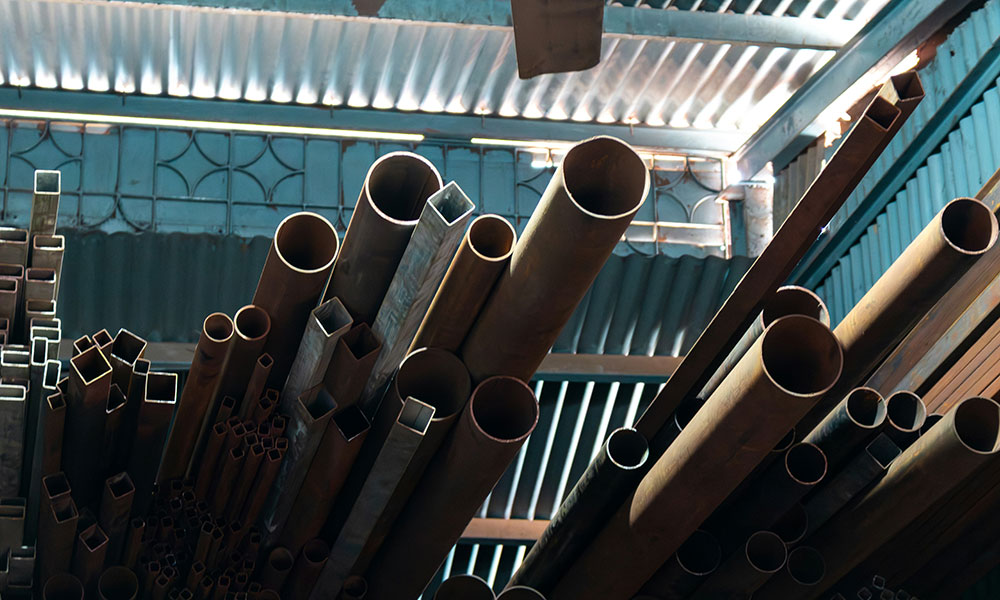
When To Use Tube Laser Cutting vs Traditional Methods
Tube laser cutting replaces multiple conventional operations such as sawing, drilling, milling, and manual jigging. Compared to traditional methods, tube laser cutting offers:
- Better weld fit-up thanks to clean, precise cuts and bevels
- Fewer fixtures and set-ups
- Much faster assembly
- Improved production repeatability
This makes it ideal for lean manufacturing, small batch runs, or full-scale production.
How Accurate Is Tube Laser Cutting?
Typical Tolerances & Cut Quality
Modern fibre tube lasers generally achieve tolerances in the region of ±0.1–0.3 mm, depending on material and machine calibration. Fibre lasers produce a clean cut edge with a minimal heat-affected zone (HAZ), improving part consistency across batches.
Factors That Influence Accuracy
Accuracy can be affected by material type and wall thickness, part length, thermal input, fixturing, machine calibration and maintenance and cut speed versus achievable finish
Designing for Accuracy
Good design reduces fabrication issues. Tips include:
- Allow sensible clearance on tab-and-slot joints
- Minimum hole size ≈ material thickness (or no smaller than 2-3 mm)
- Maintain hole-to-edge distance ≥ material thickness
- Add kerf allowance where precision is critical
Which Materials Can Be Cut?
Ferrous & Non-Ferrous Metals
Tube laser cutting is suitable for:
- Mild/carbon steel
- Stainless steel (common grades 304 and 316)
- Aluminium
- Brass and copper (supported on most modern fibre laser systems)
- Galvanised stock (with appropriate extraction considerations)
Thickness & Diameter Ranges
Typical industrial fibre tube lasers can handle:
- Tube diameters from small decorative profiles up to large structural sections
- Thin- and heavy-wall tubes
- Multi-metre bar lengths
Performance varies depending on wall thickness and tube geometry, but fibre lasers maintain high quality across a wide range.
Surface Finish Considerations
Post-processing options such as deburring, tumbling, passivation, powder coating, or zinc plating can improve appearance or corrosion resistance.
What Is Tube Laser Cutting Used For?
Tube laser cutting is widely used across industrial and architectural applications:

- Structural frames and machine bases
- Jigs and fixtures
- Handrails and balustrades
- Architectural metalwork
- Furniture and retail shopfitting
- Exhibition and display structures
- Automotive and motorsport roll cages
- Agricultural equipment
- HVAC frames and supports
- Oil & gas skid units
Operations You Can Combine
Tube laser cutting enables:
- Mitred corners
- Coping/fish-mouths
- Slotting for cables or fasteners
- Part-number etching
- Bevels for weld prep
- Bend-line marking
Advantages vs Traditional Methods
Tube laser cutting offers major advantages:
- Lower total cost due to fewer set-ups
- Faster throughput for production runs
- Reduced waste via intelligent nesting
- High repeatability for scaling up production
- Self-locating designs (tabs/slots) that improve welding accuracy and speed
Design & File Preparation (Buyer’s Guide)
To obtain an accurate and fast quote, we recommend:
- Supplying STEP or IGES files for 3D parts
- Using DXF for 2D laser-cut features
- Including wall thickness, material grade, and tolerances
- Marking features requiring post-ops (tapping, countersinks)
- Sharing batch sizes or ongoing Kanban/stock-holding requirements
Quality & Standards
At Burnhouse Engineering, tube laser cutting is supported by:
- Material certificates such as EN 10204 3.1 (available on request)
- Processes operating under ISO 9001 quality systems
- Weld-prep compliance with EN ISO 9692-1
- First-article inspection (FAI) where required
- Full traceability for production parts
Pricing & Lead Times
Tube laser cutting cost depends on:
- Material type and thickness
- Profile length and diameter
- Geometry complexity
- Batch size
- Finishing requirements
To get the best price:
- Provide consistent material specs
- Bundle similar parts
- Supply STEP files for accurate nesting
- Allow standard tolerances where possible
Burnhouse Engineering offers quick quotes and rapid lead times across Scotland and the UK.
Why Choose Burnhouse Engineering
Burnhouse Engineering provides:
- Tube laser cutting capacity suited to a wide range of materials and profiles
- Secondary services, including bending, welding, machining, and assembly
- Turnkey fabrication support from prototype to production
- Delivery across Scotland and the wider UK
Send your STEP/DXF files for a same-day quote. You can contact us via our online form or speak to our team to discuss your project.