
When you are choosing a welding or fabrication partner, asking whether someone “can weld” is only a very small part of the picture. For many engineering and fabrication projects, buyers need confidence that the person carrying out the work is suitably qualified, that the correct welding process is being used, and that the necessary quality records are in place.
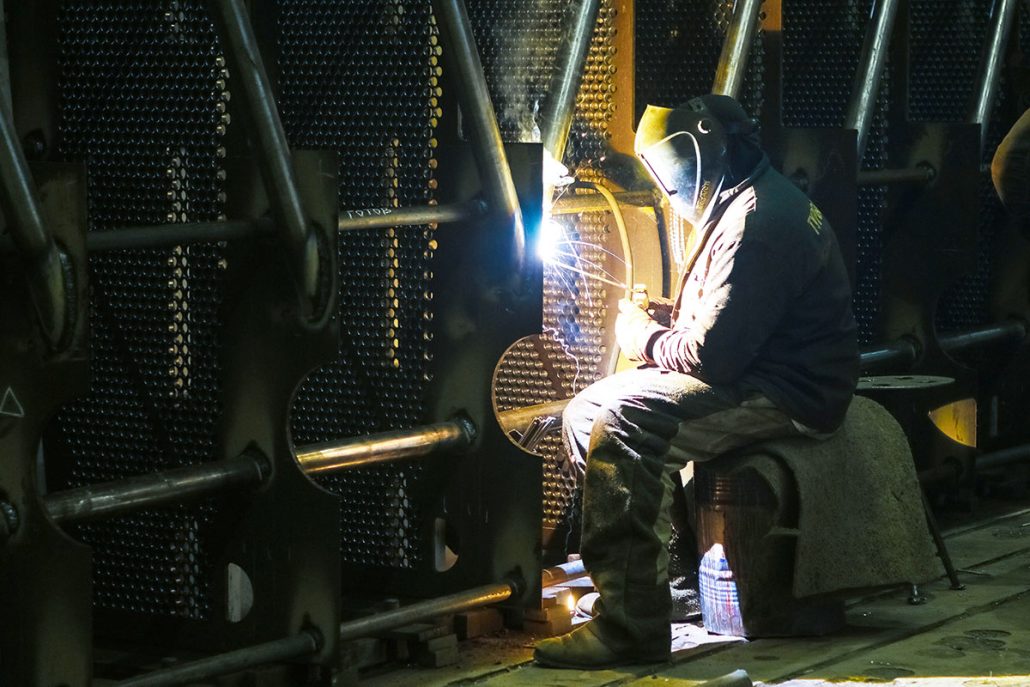
A qualified welder brings more than practical experience, as their competence should be appropriate to the material, welding process, thickness, position and application involved. For procurement teams, project engineers, contractors, and facilities managers, understanding the basics of welder qualifications can make it easier to choose the right supplier and avoid problems further down the line.
What Does “Qualified Welder” Actually Mean?
A qualified welder is someone whose welding competence has been assessed for a particular type of welding work.
The important point to remember is that welding qualifications are not universal. A welder may be qualified to carry out one process, on certain materials and within particular thickness or position ranges, without being automatically qualified for every type of welding. This matters because welding requirements can vary considerably between projects.
For example, a stainless steel pipework installation can require a different approach from structural steelwork or a general fabrication job. Similarly, welding carried out in a workshop can present different challenges from welding on site.
Why Qualifications Depend on the Type of Welding Work
Different applications require different skills and levels of control.
A project might involve:
- MIG welding
- TIG welding
- Stainless steel fabrication
- Carbon steel fabrication
- Structural steelwork
- Pipework
- Site welding
- Bespoke engineering and repair work
The appropriate qualification therefore depends on the welding process and the requirements of the job. For buyers, the useful question to ask is if your welders are qualified for the type of work needed to be carried out.
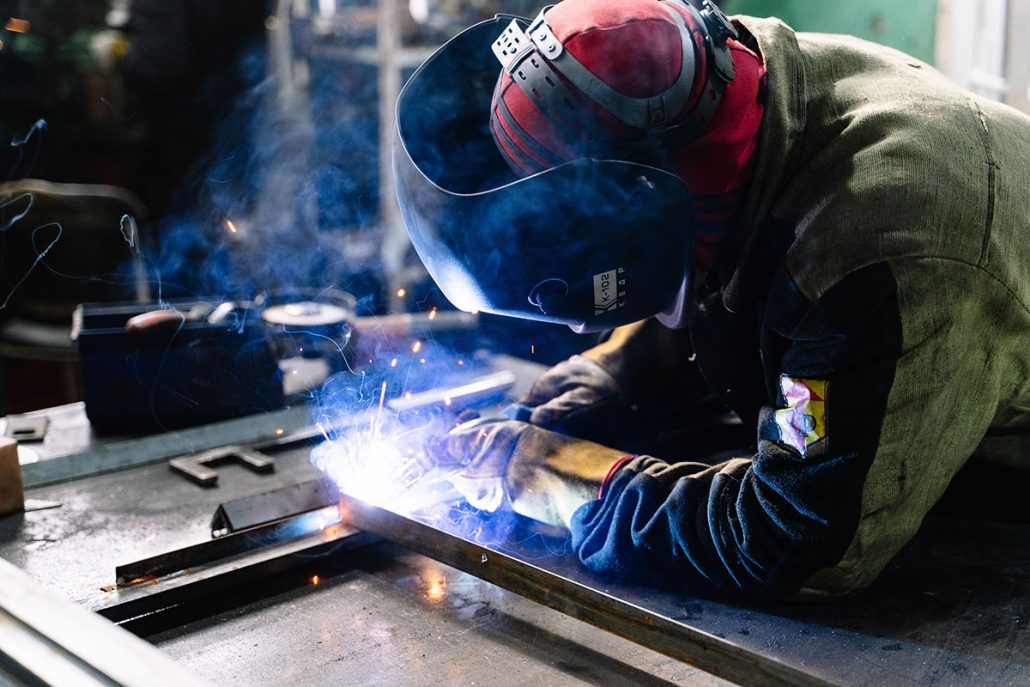
Welding Certification UK: Why It Matters to Buyers
When searching for a fabrication supplier, the term “welding certification UK” is often discussed alongside quality, compliance and project documentation.
Certification and qualification records provide evidence that welding competence has been assessed. For buyers, that evidence can support confidence in quality, safety, repeatability, and compliance.
A good-looking weld is not necessarily proof of a suitable weld. Some issues may not be obvious from visual inspection, particularly where strength, pressure, hygiene or long-term durability are important.
For this reason, appropriate welding qualifications and quality controls can be particularly important for structural, industrial and specification-led work.
They can also help reduce the risk of:
- Rework
- Delays
- Failed inspections
- Compliance issues
- Quality disputes
- Problems at handover
- Potential component or assembly failure
Certification Is About Evidence, Not Just Experience
Experience matters enormously in welding. A skilled and experienced welder understands how materials behave, how to achieve a good fit-up and how to deal with the practical challenges that arise during fabrication.
However, experience and documented competence are not necessarily the same thing. Depending on the project, buyers may need to see evidence such as welder qualification records, coded welder certificates, project QA records and welding procedure documentation.
This is particularly relevant when a client specification, industry standard or inspection regime requires formal evidence of competence.
The aim is not to create paperwork for its own sake. Welding documentation helps demonstrate that the people, procedures and processes behind the finished fabrication are suitable for the work being undertaken.
What Is a Coded Welder?
The term coded welder is commonly used to describe a welder who has been tested against a recognised welding code, standard or specification for a defined range of work.
Being a coded welder demonstrates that the individual has successfully completed a particular qualification test. However, it does not mean that the person is automatically qualified for every welding application.
A coded welder certificate relates to specific variables covered by the qualification.
These can include the welding process, material, thickness range, joint type and welding position.
Why “Coded” Does Not Mean Qualified for Everything
This is an important distinction for buyers. For example, a qualification may cover a particular process and material combination but not necessarily another process or material.
A buyer should therefore check whether the coded welder certificate is relevant to the actual project rather than simply accepting the phrase “coded welder” as a blanket assurance.
For more demanding fabrication projects, it is sensible to ask what qualifications are held and whether they cover the work being specified.
Qualified Welder vs Experienced Welder: Why Buyers Need Both
There is no substitute for practical experience. An experienced welder brings knowledge that comes from working with different materials, joint configurations, fabrication challenges and real-world conditions. That experience is particularly valuable for bespoke fabrication, repairs, maintenance and site welding.
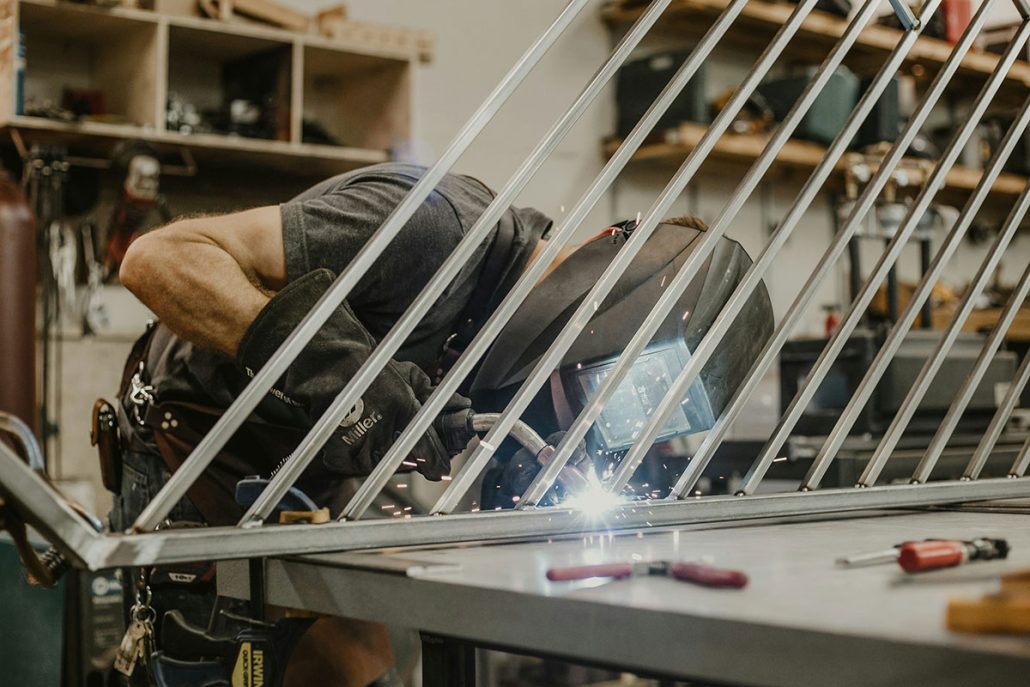
At the same time, certain projects require documented welding qualifications alongside practical experience.
The strongest combination is therefore a welder who has:
- Relevant practical experience
- The appropriate qualification
- An understanding of the applicable welding procedure
- Experience with the material and process involved
- Appropriate quality and inspection controls
For buyers, it is about matching competence to the project rather than choosing based on a qualification or years of experience alone.
When Documentation Becomes More Important
Welding documentation becomes increasingly important where there are greater safety, quality or compliance requirements.
This can include:
- Structural steelwork
- Process pipework
- Stainless steel fabrication
- Safety-critical assemblies
- Regulated industries
- Projects requiring formal inspection
- Work requiring a documented handover pack
In these situations, welding quality assurance is about more than inspecting the finished weld. The project may need evidence of materials, procedures, qualifications, inspections and testing.
What Welding Documents Should Buyers Ask For?
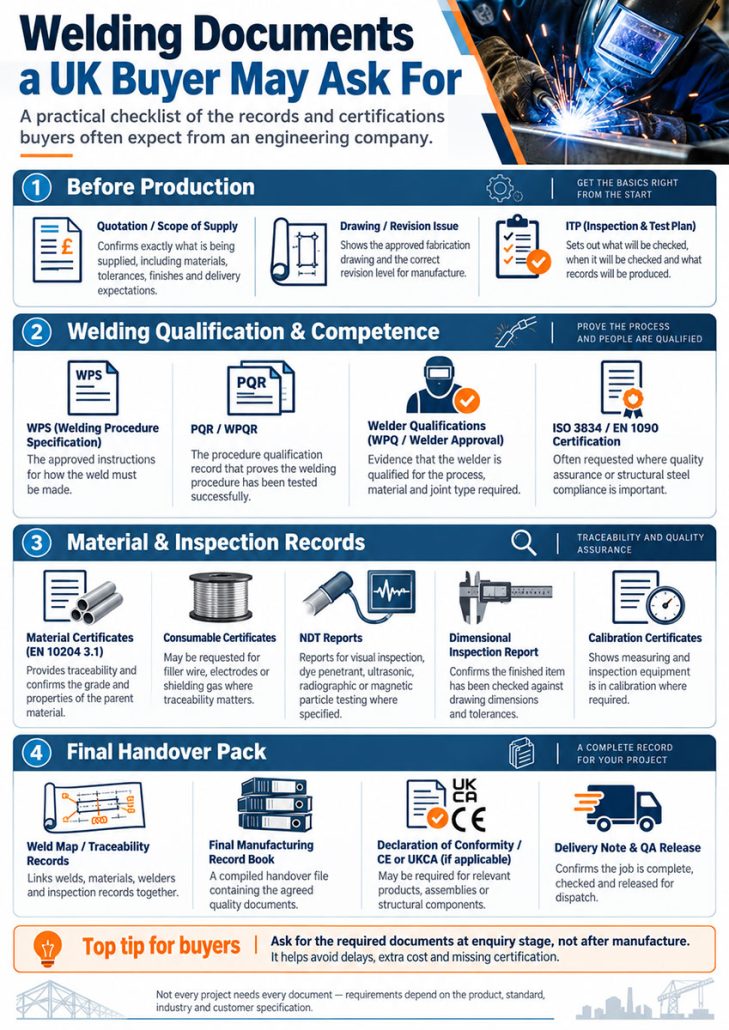
The exact requirements will depend on the project specification, but buyers may need to ask about:
- Welder qualification records
- Coded welder certificates
- Welding procedure specifications
- Procedure qualification records
- Inspection and test plans
- Material certificates
- Inspection reports
- Non-destructive testing records, where required
- Quality control records
- Project handover packs
Not every fabrication project needs every document on this list. A small repair will not necessarily require the same level of documentation as a structural, pharmaceutical, marine or industrial fabrication project. The key is to establish the requirements before fabrication begins.
Matching Documentation to the Project
Good welding quality assurance starts with understanding what the project actually requires. If the client needs specific qualification records, inspection reports, material certificates or a formal QA pack, these requirements should be discussed during enquiry and specification rather than added at the end.
Doing this early allows the fabrication partner to plan the work correctly, allocate the appropriate resources and make sure the required welding documentation is produced as the project progresses.
Are All Welder Qualifications the Same?
No. This is one of the most important points for anyone reviewing welder qualifications.
A qualification is normally limited by the conditions covered by the test. A qualification for MIG welding, for example, does not automatically qualify someone to carry out TIG welding. Likewise, a qualification covering carbon steel does not necessarily cover stainless steel. Site welding can also introduce different practical considerations from controlled workshop conditions.
Process, Material, Position and Application
When checking whether a qualification is suitable, buyers should consider:
- Welding process – such as MIG/MAG or TIG
- Material type – such as carbon steel or stainless steel
- Material thickness
- Weld position
- Joint type
- Workshop or site conditions
- Project specification
These variables are why it is worth discussing the actual job with your fabrication supplier rather than relying on a general statement that their welders are “qualified”.
Red Flags When Choosing a Welding or Fabrication Supplier
A good fabrication supplier should be comfortable discussing welding competence, procedures and quality requirements.
Potential warning signs include:
- Vague claims about being “fully qualified” without supporting evidence
- No clear answer about relevant welder qualifications
- Expired or unsuitable qualification records
- No clear link between a qualification and the work being undertaken
- Poor or inconsistent welding documentation
- No clear inspection or quality control process
- Uncertainty about which welding standard or procedure applies
- Reluctance to discuss project QA or handover requirements
You do not need to become a welding engineer to identify these issues. The important thing is to ask sensible questions and make sure the supplier understands what your project actually requires.
Questions Buyers Should Ask Before Placing an Order
Before appointing a welding supplier, consider asking:
- Are your welders qualified for this type of work?
- Can you provide evidence of relevant qualifications if required?
- Do you work to approved welding procedures?
- What inspection or testing will be carried out?
- What documentation will be provided at handover?
- Who checks the welding requirements before fabrication begins?
Clear answers at the start of a project can prevent much more complicated conversations later.
Where Qualified Welders Matter Most
The need for a qualified welder becomes particularly important where the consequences of poor welding quality can be greater.
Examples include:
- Structural steelwork
- Process pipework
- Stainless steel fabrication
- Pharmaceutical and life science projects
- Food and drink manufacturing
- Marine engineering
- Machinery fabrication and maintenance
- Site welding and repairs
- Industrial platforms, frames and supports
In these environments, welding can form an important part of the overall integrity of the finished component or system.
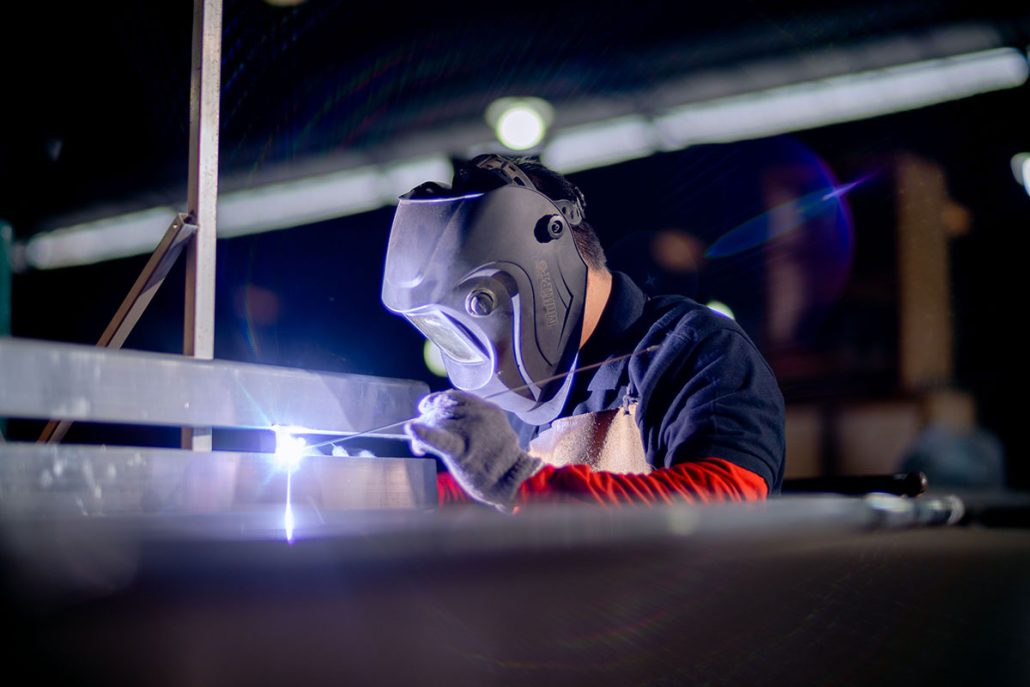
The combination of competent welders, appropriate procedures, inspection and welding and fabrication experience helps give buyers greater confidence in the finished work.
Why Buyers Should Raise Quality Requirements Early
If your project requires specific qualifications, inspection records, material certificates or project QA, mention them at enquiry stage.
This gives the fabrication partner an opportunity to understand the requirements before pricing and manufacturing begin.
It also helps avoid situations where a fabrication is complete but additional documentation, inspection or testing is required retrospectively.
Early communication can make the whole process more straightforward, from quotation and planning through to fabrication, inspection and handover.
How Burnhouse Supports Quality-Led Welding and Fabrication Projects
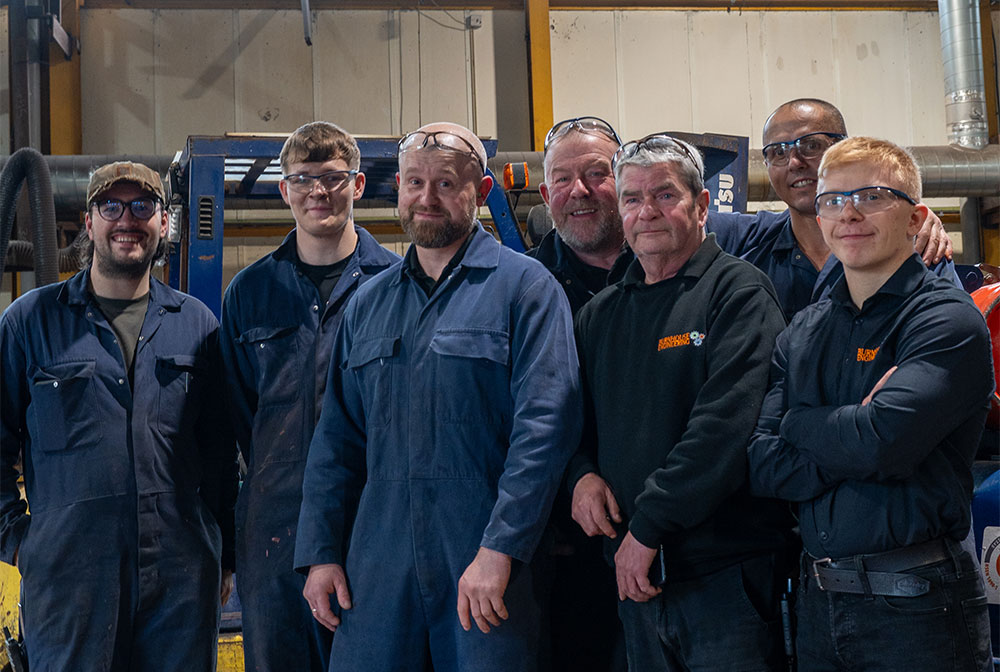
Burnhouse Engineering supports clients with welding and fabrication across a range of engineering and industrial applications, including manufacturing, marine, pharmaceutical and life science environments.
The practical requirements of a project can vary considerably, which is why discussions around materials, welding processes, fabrication methods, documentation and quality expectations are important from the outset.
Burnhouse’s wider capabilities include MIG and TIG welding, fabrication, structural steelwork, pipework, sheet metal work, engineering design and site-based services.
Where a project requires specific qualification evidence, welding documentation or
inspection records, these requirements should be established early so that the appropriate controls can be incorporated into the project.
For buyers, that means working with an engineering supplier that understands not just how to manufacture a component, but how the welding, fabrication, documentation and project requirements need to work together.
Choosing a Qualified Welder Is About Reducing Project Risk
Choosing a qualified welder is about more than finding someone who can produce a good-looking weld.
The relevant qualifications, welding process, materials, procedures and documentation all need to be appropriate to the work being carried out.
For buyers, welding certification UK requirements can initially seem technical, but the underlying principle is straightforward: you want evidence that the people carrying out the work are competent and that the process is controlled.
You do not need to become a welding specialist. Ask the right questions, establish the quality requirements early and make sure the supplier can provide the evidence and documentation your project needs.
Need a welding or fabrication partner with the right skills, documentation and project control? Speak to Burnhouse Engineering about your next project.